

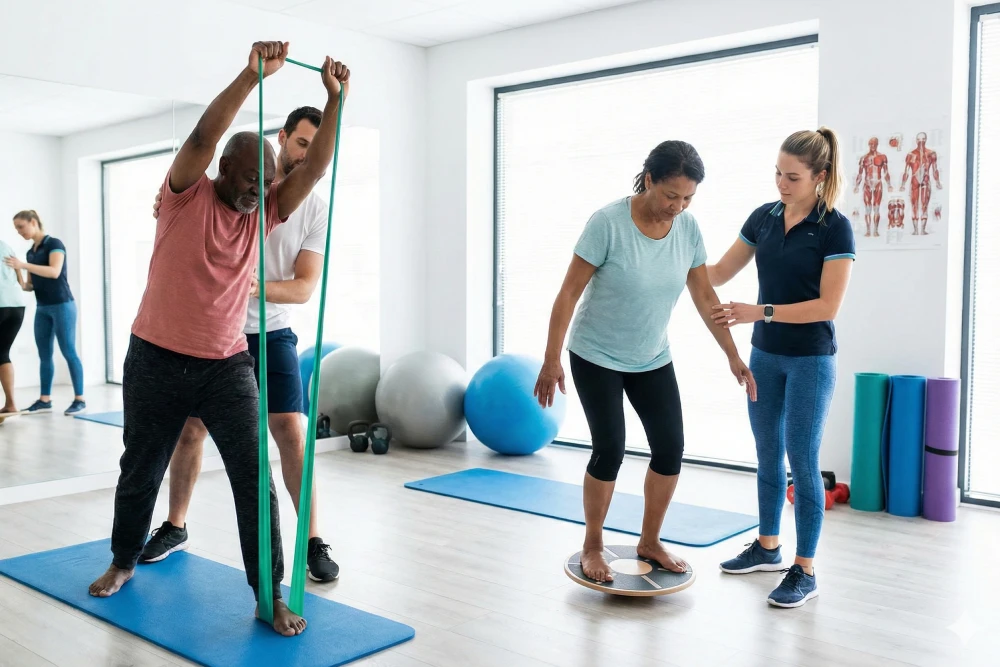
What Is Kinesiology? How Active Rehabilitation Restores Strength After Injury
So you got hurt. Maybe it was something dramatic, or maybe it was just that one wrong move you’ve made a thousand times before. Now you’re stuck in that awful in-between place. The sharp pain is gone, but you don’t feel right. You try to get back to your routine, and your body whispers (or shouts) a firm “nope.”
I get it. The standard advice—rest, ice, maybe some pills—only gets you so far. It calms things down, but it leaves you feeling fragile, like you’re just waiting for the next tweak or twinge. What if the problem isn’t just the injury itself? What if it’s how we’re told to recover?
Let me tell you about a different way. It’s not a magic trick. It’s actually slower and requires more from you than just lying on a couch. But it’s the only thing I’ve found that doesn’t just patch you up—it rebuilds you from the ground up. It comes down to two things: understanding kinesiology, and committing to active rehabilitation.
Kinesiology Isn’t a Fad. It’s Just How Your Body Works.
Forget any confusing definitions. In plain English, kinesiology is the art and science of figuring out why your body moves the way it does. Most of us, when we hurt a knee, think, “My knee is broken.” A kinesiology lens asks, “What did your ankle, hip, and walking pattern do to break that knee?”
It’s detective work for your body. A good specialist isn’t just looking at you; they’re watching how you move.
- Do you shift all your weight to one side when you stand?
- Does one shoulder hike up when you reach overhead?
- Can you balance on your injured leg without doing a wild arm-flail dance?
They’re connecting dots you didn’t even know were there. That ache in your lower back? It might be throwing a tantrum because your feet have forgotten how to stabilize. This science finds the real story behind the pain. And you can’t fix a story you don’t understand.
The Big Lie of “Just Take It Easy”
Here’s the hard truth no one likes: Passive recovery makes you weaker. Full stop.
Don’t get me wrong—in the first 48 hours after a sprain or strain, rest and ice are your best friends. But after that acute phase, staying still becomes the enemy. Your body is an adaptation machine. If you don’t use it, it assumes you don’t need it. Muscle melts away, joints get stiff, and your brain gets a little fuzzy on how to control the injured part. You end up with a body that’s pain-free but fundamentally unstable. It’s like quieting a fire alarm by removing the battery. The problem’s still smoldering.
This is the gap where active rehabilitation lives. It’s the conscious, often challenging, work of using specific movement as your most powerful medicine. It’s the difference between being a passenger and being the driver in your own recovery.
What “Doing the Work” Actually Looks Like
This isn’t about gritting your teeth and powering through pain. It’s a thoughtful, sometimes boring, step-by-step process.
Step 1: The Reset. Before we lift anything, we have to reboot the connection between your brain and the injured area. This means drills that feel silly but are secretly brilliant: tracing the alphabet with your ankle, gently pressing your knee into a pillow and holding it, standing on one leg on a soft surface. It’s not about strength. It’s about waking up the neural pathways that went to sleep.
Step 2: The Rebuild. Now we add gentle load, but with laser focus. We’re not just doing leg lifts; we’re doing leg lifts that target the specific, often-neglected muscle that failed you in the first place. This phase loves eccentric movements—the slow, lowering part of an exercise. It’s where tendons and ligaments learn to be resilient again. It’s patient, unsexy work.
Step 3: The Reintegration. This is where it gets fun. You start to move like a human again, not a patient. We take the strength from the gym and test it in the real world. Can you lunge and rotate to mimic picking up a grocery bag? Can you jump and land softly? Can you push, pull, and carry without that old fear creeping in? This phase bridges the gap between “rehab” and “life.”
The Secret Benefit No One Talks About
The biggest reward of this approach isn’t just a healed muscle. It’s confidence.
When you passively recover, you’re always a little scared. You gingerly test the waters, hoping nothing hurts. When you actively rehabilitate, you know what your body can do. You’ve stress-tested it. You’ve felt it get stronger under your own effort. That mental shift—from fear and fragility to trust and capability—is everything. It turns an injury from a setback into a masterclass in how your own body operates.
Where Do You Start?
It begins with finding the right guide. Look for someone who asks more questions than they answer at first. Who wants to see you move, not just hear where it hurts. Who talks about your goals (gardening, playing with your kids, running a 5k) as much as your diagnosis.
Your body is waiting for the right instructions. It wants to be strong. It’s designed to heal. Sometimes, it just needs a better blueprint. Ditch the passive hope, and pick up the active work. It’s the only path back to a body you can truly trust.