

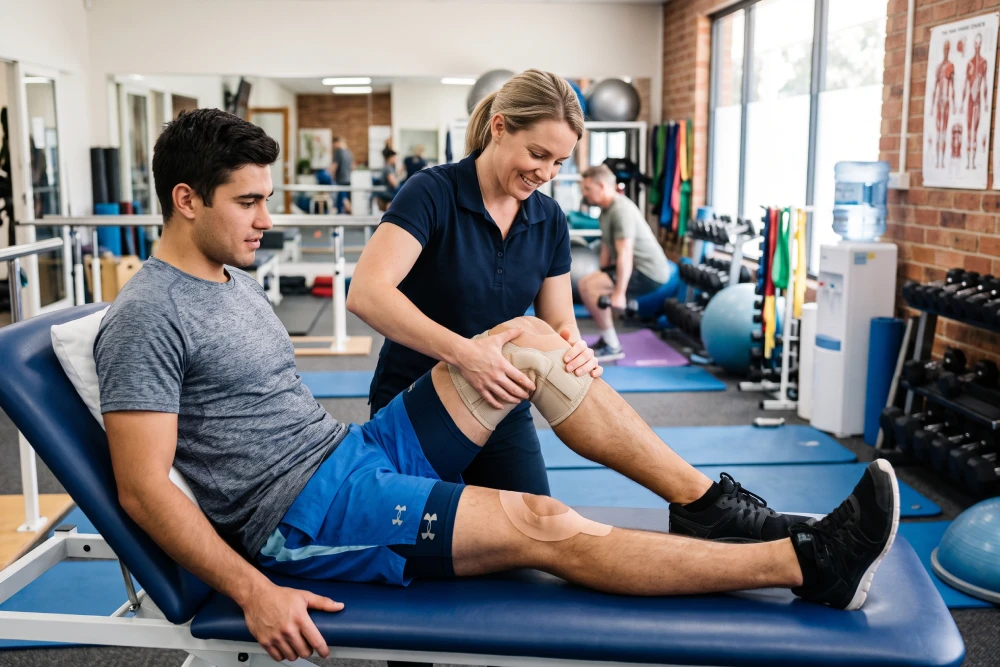
People playing sports on a regular basis knows that every sport has its own injuries. It can be a rolled ankle playing a weekend match, or maybe you have a strained hamstring from running. Even something as tame as a shoulder tweak from a swing can be frustrating, but the good news is that injuries that happen on the field don’t have to badly hurt your activities on the field. There are off-field solutions that can take the guess work away from returning to your sport. Physiotherapy and sporting injuries have a pathway that is evidence-based and structured, and understanding the process can take away the anxious feelings of recovering.
Purpose of Physiotherapy After An Injury
The first instinct you might have when you get a sports injury is to rest and sit it out until it goes away. Rest does have its place and can be helpful, but it rarely is going to be the complete solution. Muscles, tendons, joints, and other tissues lining the body can heal up properly with painful movement, and too much downtime can cause stiffness and weakness. In addition to that, if you come back and play your sport too early, you can re-aggravate the healing injury. There is a middle ground to consider and move, and that is where the physiotherapist comes in and fills the role. They can create a tailored plan based on what they assess your body to need.
Sports Injury Rehabilitation Explained
The process of rehabilitation for your sports injury will have your physiotherapist assess the injury and where along your body it sits. From that they are able to formulate a plan based on the healing of the injury and what movements are affected from it, and the goal of that plan will be to reduce swelling and pain, and then focus on regaining range of motion. Following that will be strengthening and returning funtion to your sport.
Expectations of Recovery
Now that you have likely come to appreciate the process of rehab, here is what you are likely going to see.
Pain management and evaluationPatients are often cared for in a “calm-down” phase after an injury. The approach includes manual therapy, pain management techniques, and the removal of excess inflammation and fluid. During this phase, your therapist will observe what compensations your body has made for pain avoidance and will correct these to prevent them from becoming permanent as you continue to heal.
Improving movement and flexibility After the control of acute pain, focus is on soft tissue and joint movement. Stiffness is a natural part of the healing process and can be managed with increased movement using targeted stretching and therapy.
Strength training This is when the majority of your progress will be observed. The focus is on building strength of the injured area and restoring balance in surrounding areas but in a manner that is progressive. The injured area will be built in a way that will reinforce the surrounding areas of the injured tissue as well.
Training for sport-specific activities and functional movement Before building back full activities, your therapist will use targeted movements for your sport that will help in the restoration of your efficiency in cutting, jumping, throwing, and sprinting to name a few. While this is the most tedious and time consuming stage of recovery, it is the most important in re injury prevention.
Value of a Professional for Your Recovery from the Injury
When you attempt to handle your recovery without any help from professionals, it is mostly just guessing. You are guessing when you should push yourself more and when the soreness is still acceptable. You are guessing whether you are ready to take part in the competition. The physiotherapist will eliminate most of the guessing from the process. They will monitor your condition and adjust the rehabilitation program according to how well your body responds to it.
There is another side of physiotherapy which is easy to forget. In addition to the physical procedures, physiotherapists teach their patients. They inform about the reasons why this particular injury occurred, about the movement patterns they should avoid and how to prevent the injury in the future.
Returning to the Sport That You Enjoy Playing
It requires patience for recovering from an injury sustained playing your favorite sport. Nevertheless, with the proper guidance, recovery is much easier than you might have expected. Physiotherapy provides you with a definite plan which considers the time required by your body to heal itself while ensuring the return to the sport is in focus. No matter whether it is just a small strain or a more serious injury, having a professional guide through the rehabilitation process makes all the difference.
If you are suffering from a sports injury at the moment, getting in touch with a physiotherapist can provide you with a clear picture about what is going on and what the process of recovery requires.