

How Physiotherapy Helps in Stroke Recovery and Rehabilitation
The stroke may affect numerous areas of your life such as walking, balance, mobility, and even everyday activities. It requires patience, time and proper assistance for recovery. Physiotherapy is the procedure that may help stroke patients restore their mobility, increase their strength and achieve independence.
Regardless of whether you have just had a stroke or are dealing with its long-lasting effects, a tailored program of rehabilitation can make all the difference. By understanding how physiotherapy helps stroke survivors recover, patients can make the next step easier.
What Happens After a Stroke?
Whether you are fresh from your stroke or suffering from its aftereffects, a custom-designed rehabilitation program can really be of help. Learning about the ways physiotherapy can help stroke victims is one of the easiest steps that patients can take.
While some might feel weak in one side of their body, others might find themselves having problems with coordination and movement. Effects differ from patient to patient, which is why stroke rehabilitation must be personalized to meet one’s requirements.
Physiotherapy aims at enhancing movement through bodily functions as well as relearning of movement patterns by the brain.
How Physiotherapy Supports Stroke Recovery
1. Improving Strength and Movement
A stroke often results in muscle weakness, which makes performing basic tasks more difficult. Exercises that are specially selected by physiotherapists will help strengthen muscles and control their movement.
Some of the treatment options can include movements, exercises, and activities that help the patient get used to moving his limbs.
Confidence is to be developed through the improvement of the capacity to complete tasks in a safe manner.
2. Improving Balance and Walking
Having balance issues increases the chances of experiencing a fall after a stroke. Physiotherapy for balance problems enables a patient to address their balance, coordination, and control.
The balance exercises will be included by the physiotherapist during the rehabilitation of the stroke patients, based on their ability.
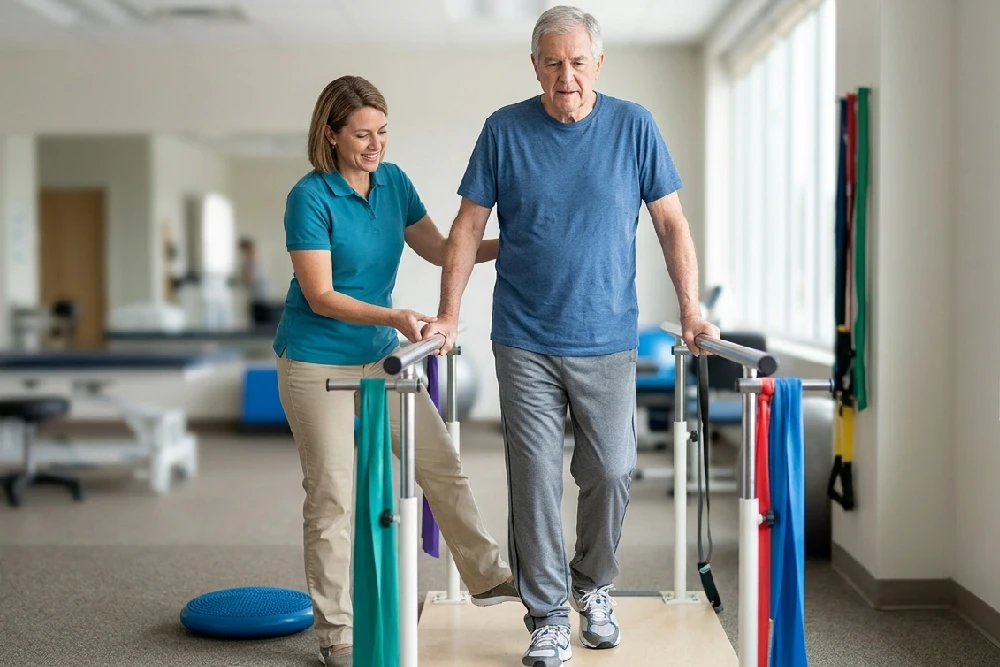
Walking practice includes things like standing with support, practicing steps, and gait training. These can aid in building confidence while walking and moving around in the house.
3. Supporting Mobility and Independence
In stroke rehabilitation, one must not solely focus on strengthening muscles but also be able to move safely when performing everyday tasks.
A physiotherapist can work with you on your ability to get in and out of a chair, turn in bed, walk up and down stairs, and ambulate using assistive devices.
Mobility training for senior citizens and stroke victims can be modified based on the strength, balance, and comfort level of the patient. This may enhance their ability to carry out daily activities.
4. Helping Prevent Falls
Balance issues are a worry to many stroke patients trying to recover from their stroke.
Physiotherapy for fall prevention can involve balance exercises, muscle strength training, walking training, and safe movement education.
Moreover, the physiotherapist is able to advise on proper walking devices that should be used by the patient, as well as provide safety advice when it comes to performing certain daily activities.
Why Consistent Rehabilitation Matters
Recovery from stroke may include improvements with time and people have individual responses to treatments. Physiotherapy sessions along with the right home exercise regime can help achieve this.
The physiotherapist will assess progress made by the patient and modify exercises based on his evolving capabilities. Small progress made with movement, balance or confidence makes daily tasks easier.
Family members and caregivers can also be significant by ensuring safe participation and heeding the advice of the rehabilitation team.
When Should You Start Physiotherapy After a Stroke?
Physiotherapy is scheduled based on the health condition of the individual and recommendation by their physicians. The rehabilitation process may start in hospitals and be carried out at home or outpatient centers.
Beginning a suitable rehabilitation program at an early stage can assist in overcoming any problems related to movement as well as setting achievable goals for recovery.
Conclusion
Physiotherapy for the elderly and stroke victims can enhance their strength, stability, mobility, and independence during recovery. Physiotherapy can help patients regain confidence to do things safely with the help of exercises and functional movements.
In case you or your family member is recovering from a stroke, then speaking to a professional physiotherapist will give you an idea about the kind of treatment that can be taken.