

How Physiotherapy Can Help After a Sports Injury
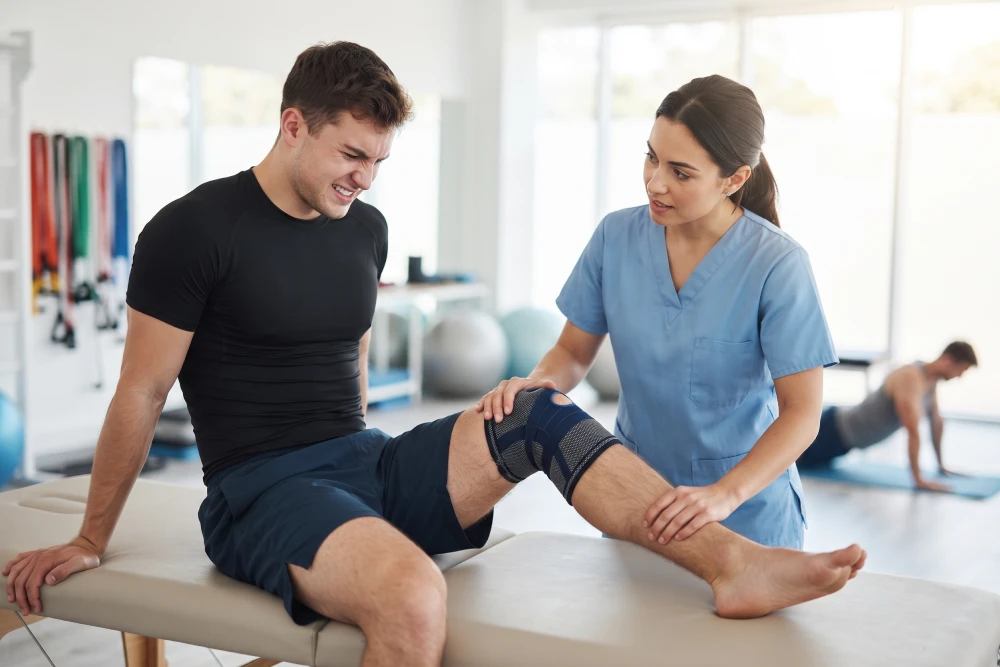
It happens to the best of us. A soccer game on the weekend ends with a twisted ankle. A morning run becomes a pull in your hamstring. Your shoulder never feels the same after a hockey season. A sports injury can really take a toll on your enjoyment of the game.
Most people don’t think twice about an injury and give it a rest for a few days. Sometimes that’s all it takes. More often than not, people try that strategy only to find the injury returning as soon as they step back on the field.
Sports injury physiotherapy can speed up the healing process and get you back in the game faster than taking a break.
Definition of Sports Injury?
Injury caused to the body during exercise, training and any form of athletics is referred to as sports injuries. Sports injuries can occur either abruptly or can be formed through repeated strain on the body over time. Some examples of sports injuries which occur abruptly are sprains, strains, dislocations, fractures, and so forth. Chronic or repetitive strain can lead to injuries like tendonitis, shin splints, runner’s knee, tennis elbow and many more.
People who participate in exercise or athletics can get sports injuries.Why See a Sports Physiotherapist?
The sports physiotherapist has training to comprehend the mechanisms of bodily functions when under stress and what happens when they fail to function properly. The physiotherapist does not focus just on the injured body part but attempts to get to the root of why it happened.
For instance, knee injuries may not be directly linked to the knee but rather to the weakness of muscles in the hip joint or unstable ankles. If the treatment focuses just on the knee joint, the problem will recur because the actual cause remains untouched.
How Physiotherapy for Sports Injuries Works
1. A Complete Evaluation
The first time you see your physiotherapist, you start off by talking to each other. Your therapist will ask you about how you got hurt, what it feels like when you are in pain, what activities you enjoy at work and during exercise and what activities you would like to return to.
This helps them understand which body part is affected, what compensates it, and what needs to be done first.
2. Pain & Swelling Management
During the first stage, it is important to try and reduce pain and swelling. This can be done by means of hands-on techniques, exercises and/or other methods that will help manage pain and swelling. Your therapist will also give you advice on what to avoid and what to continue, as complete immobilization is not always the solution.3. Restoring Movement and Strength
After the initial discomfort fades away, the focus switches to reconstruction. Stiff joints are flexed, tense muscles are stretched, and weak parts are strengthened using specific exercises.
At this point, the bulk of the therapy’s long-term value becomes clear. The muscle loses its strength fast after a bodily injury, and without proper training, the body will find alternative methods for movement.
4. Correcting Movement Patterns
Landing technique flaws, asymmetry in your running pattern, or poor shoulder rotation may cause injuries. Your physiotherapist will be able to identify these faults and help you change them so that your tissue is not under continuous stress.
5. A Gradual Return to Sport
One of the most prevalent causes of injury reoccurrence is an early return. Return to sport should take place gradually, following an incremental progression from mobility, to skills, then finally training. Progress is determined based on bodily readiness and response and not simply time elapsed since the initial injury.
Preventing the Next Injury
Recovery doesn’t have to end when the pain stops. Many clinics also help you build habits that lower your risk going forward, such as:
- Warm-up routines suited to your sport
- Strength and conditioning exercises for your weak points
- Advice on training load, so you increase intensity gradually
- Guidance on footwear, technique and recovery time
Small changes like these add up, especially over a long season.
When Should You Book an Appointment?
The following should be seen by a physiotherapist:
- Pain that persists beyond a few days or recurs
- Any form of swelling or bruising and a sense of instability of a joint
- Having difficulty bearing weight on a limb or using an arm properly
- Pain that affects your ability to sleep or perform other functions
- A reduction in performance that cannot be explained
Visits made earlier on will definitely ensure that your recovery is an easy process whereas late visits will elongate the process of rehabilitation.
Conclusion
Being injured due to participation in sports is not something that will automatically put an end to your active lifestyle. It is possible for you to recover and strengthen yourself with the help of the experts. This is where sports physiotherapy comes in handy and ensures that you are able to resume with your activities.
It would be wise for you to make an appointment with the physiotherapists in case you are being hindered due to your sports injury.