

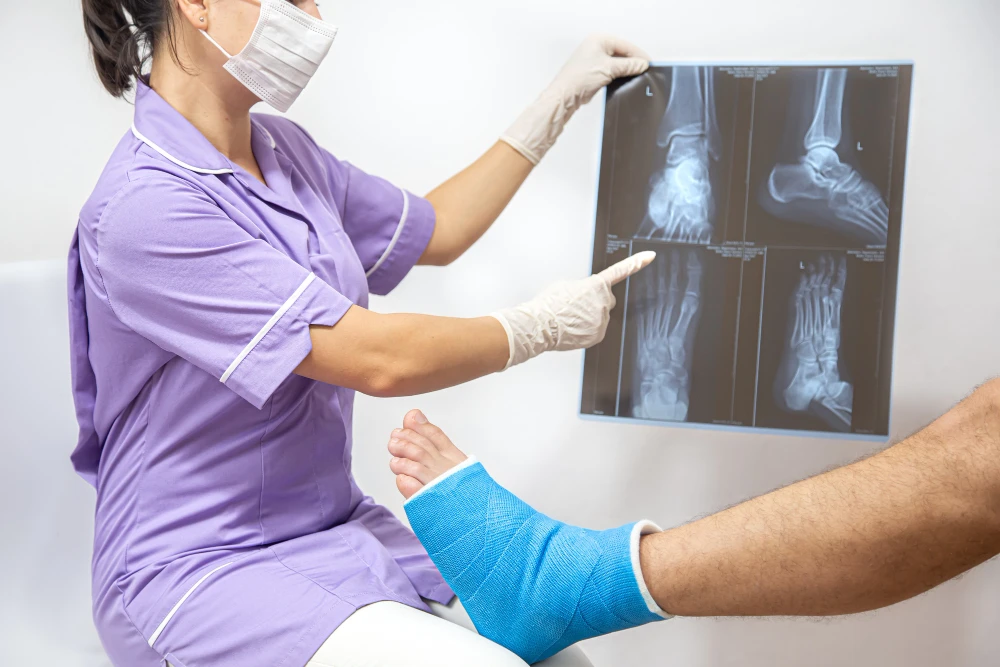
A clear, practical guide to understanding ankle sprains — from the moment of injury to getting back on your feet.
What Is an Ankle Sprain?
Ankle sprains are one of the most common musculoskeletal injuries — affecting athletes, office workers, and everyone in between. It happens when the ligaments that hold your ankle joint together are stretched or torn, usually because the foot rolls, twists, or turns beyond its normal range of motion.
Despite how routine they seem, ankle sprains deserve proper attention. Leaving one untreated — or returning to activity too soon — can lead to chronic instability, recurring pain, and a much longer road to full recovery.
This guide walks you through everything you need to know: the types of sprains, how to recognise symptoms early, what treatment actually works, how long recovery takes, and how to protect your ankles going forward.
Types of Ankle Sprains
Not all ankle sprains are the same. The type depends on which ligaments are involved and the severity of the damage.
By Location
- Lateral sprain (inversion sprain): The most frequent kind. The foot rolls inward, stressing the ligaments on the outer side of the ankle.
- Medial sprain (eversion sprain): The foot rolls outward, injuring the ligaments on the inner side. Less common but often more serious.
- High ankle sprain (syndesmotic sprain): Involves ligaments above the ankle joint that connect the tibia and fibula. Common in contact sports; recovery is typically longer.
By Severity — The Grading System
| Grade | Ligament Damage | Symptoms | Recovery Time |
| Grade I | Mild stretch, micro-tears | Mild swelling, tenderness | 1–3 weeks |
| Grade II | Partial tear | Moderate swelling, bruising, some instability | 3–6 weeks |
| Grade III | Complete tear | Severe swelling, significant instability, inability to bear weight | 3–6 months |
Common Symptoms to Watch For
Symptoms vary depending on the grade, but there are several signs that indicate a sprain rather than a simple bruise or muscle strain:
- Sudden pain at the time of injury, especially on the outside of the ankle
- Swelling that develops within a few hours
- Bruising or discolouration around the joint
- Tenderness when you press on the affected area
- Limited range of motion
- A feeling of instability — as if the ankle might “give way”
- Difficulty or pain when putting weight on the foot
When to see a doctor immediately: If you heard a “pop” at the moment of injury, cannot bear any weight at all, or notice significant deformity, see a healthcare provider promptly. These signs can indicate a fracture or complete ligament rupture that needs imaging to assess properly.
Causes and Risk Factors
An ankle sprain can happen to anyone — you don’t need to be playing sport. Common causes include:
- Landing awkwardly from a jump or step
- Walking or running on an uneven surface
- Suddenly changing direction during physical activity
- Wearing footwear that offers poor ankle support
- Another person accidentally stepping on your foot during play
Certain factors increase your likelihood of getting a sprain, including a history of previous ankle injuries (the most significant risk factor), poor physical conditioning, weak ankle muscles, and reduced proprioception — your body’s ability to sense joint position.
How It’s Diagnosed
A doctor or physiotherapist will typically perform a physical examination, checking for areas of swelling and tenderness and testing the stability of the ligaments by gently moving the ankle in different directions.
Imaging is not always necessary. However, the Ottawa Ankle Rules — a widely used clinical guideline — help clinicians decide when an X-ray is needed, generally when there is bone tenderness at specific points or an inability to bear weight. An MRI may be ordered for high-grade sprains where soft tissue detail is important.
Treatment Options
For most ankle sprains, treatment begins at home with a well-known protocol — though the approach has evolved over the years.
The RICE Method (and Its Update)
You may have heard of RICE: Rest, Ice, Compression, and Elevation. It remains a sensible starting point in the first 48–72 hours. However, many clinicians now recommend POLICE or PEACE & LOVE protocols, which introduce early controlled movement (optimal loading) to prevent stiffness and support tissue healing.
- Protect the ankle briefly to avoid further damage
- Optimal Loading — gentle movement as soon as tolerated
- Ice for 15–20 minutes, several times a day
- Compression using a bandage to reduce swelling
- Elevation of the foot above heart level when resting
Medications
Over-the-counter anti-inflammatory medications such as ibuprofen can help manage pain and reduce swelling during the acute phase. Always consult a pharmacist or doctor before taking them, especially if you have other health conditions.
Physiotherapy
For Grade II and Grade III sprains, a course of physiotherapy is strongly advisable. A physiotherapist will guide you through a structured rehabilitation programme covering range of motion, strength, balance, and functional movement — reducing the risk of long-term instability.
Bracing and Support
Ankle braces or supports can be worn during the recovery period to provide stability while the ligaments heal. They are particularly useful when returning to sport or physical activity.
Surgery
Surgical intervention is rare and typically reserved for Grade III injuries where conservative treatment has not restored stability after several months, or for competitive athletes where full joint integrity is essential.
Recovery Time Summary: Grade I sprains often resolve within 1–3 weeks with self-care. Grade II sprains may take 4–6 weeks with physiotherapy. Severe Grade III injuries can require 3–6 months, particularly if surgery is involved. Rushing recovery significantly increases the risk of re-injury.
Rehabilitation Exercises
Rehabilitation is where long-term recovery actually happens. Once the initial swelling and pain have settled, gentle exercises help rebuild strength, flexibility, and proprioception. Here are exercises typically introduced in phases:
Alphabet Tracing
Lift your foot slightly and trace the letters of the alphabet in the air using your big toe. Improves range of motion gently.
Towel Stretch
Sitting with legs straight, loop a towel around your foot and gently pull toward you. Hold 20–30 seconds to stretch the calf and Achilles.
Resistance Band Eversions
Loop a resistance band around the foot and push outward against resistance. Strengthens the muscles protecting the lateral ligaments.
Single-Leg Balance
Stand on the injured leg for 30 seconds. Progress to doing this with eyes closed. Rebuilds proprioception — crucial for preventing future sprains.
Calf Raises
Rise up onto your toes and lower slowly. Do both legs, then progress to single-leg. Builds the calf and peroneals that stabilise the ankle.
Wobble Board Training
Stand on a balance or wobble board. Challenges the ankle’s stabilising muscles in multiple directions simultaneously.
Always start these exercises within a pain-free range. If any movement causes sharp pain, stop and consult your physiotherapist before continuing.
Prevention Tips
Once you’ve had one ankle sprain, you’re significantly more likely to have another — unless you actively work to prevent it. The good news is that most recurrences are avoidable.
- Wear footwear appropriate for the surface and activity — avoid worn-out soles or shoes without ankle support during sport
- Warm up properly before exercise; cold muscles and ligaments are more vulnerable to injury
- Include balance and proprioception training in your regular workout routine, even after full recovery
- Strengthen the muscles around the ankle — particularly the peroneals and calf — through targeted exercises
- Be mindful on uneven terrain; slow down on trails, cobblestones, and wet surfaces
- If you have a history of ankle sprains, consider wearing a prophylactic ankle brace during high-risk activities
- Do not rush back to sport after an injury; always complete your rehabilitation programme fully
- Maintain a healthy body weight, which reduces the mechanical load on ankle joints